
![[Poland] 라도미우 납골당: 사암과 콘크리트로 빚은 추모의 공간](/_next/image?url=https%3A%2F%2Fmedia.brique.co%2F2026%2F03%2Fbdr-kolumbarium-w-radomiu-12-scaled.jpg&w=3840&q=75)
[Poland] 라도미우 납골당: 사암과 콘크리트로 빚은 추모의 공간
베데에르 아르히텍치 BDR Architekci
- 건축 용도
- 봉안시설 Columbarium
- 주요 구조
- 철근콘크리트 RC
- 위치
- 라돔 Radom
©Jakub Certowicz
©Jakub Certowicz
©Jakub Certowicz
©Jakub Certowicz
©Jakub Certowicz
©Jakub Certowicz
©Jakub Certowicz
©Jakub Certowicz
©Jakub Certowicz
©Jakub Certowicz
©Jakub Certowicz
©Jakub Certowicz
©Jakub Certowicz
©Jakub Certowicz
©Jakub Certowicz
©Jakub Certowicz
©Jakub Certowicz
©Jakub Certowicz
©Jakub Certowicz
©Jakub Certowicz
©Jakub Certowicz
©Jakub Certowicz
©Jakub Certowicz
©Jakub Certowicz
©BDR Architekci
©BDR Architekci
©BDR Architekci
©BDR Architekci
©BDR Architekci
©BDR Architekci
©BDR Architekci
에디터. 석정화 글 & 자료. 베데에르 아르히텍치 BDR Architekci
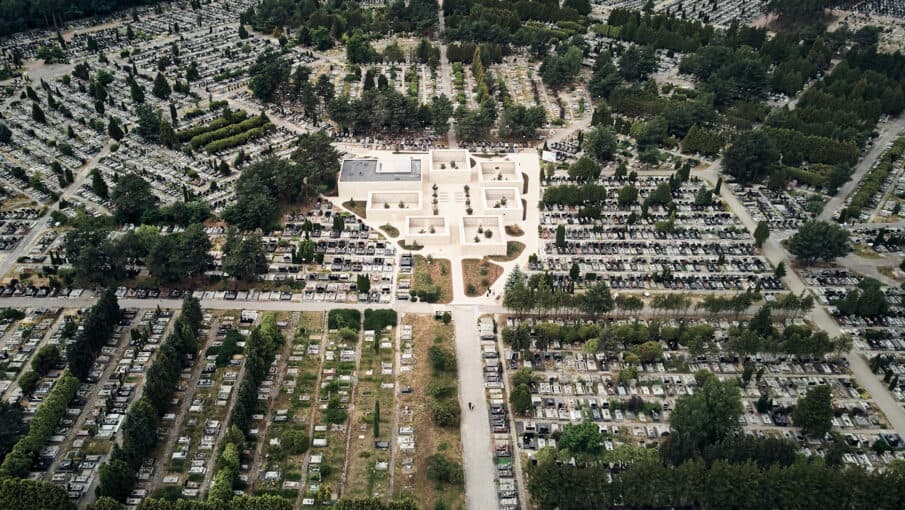
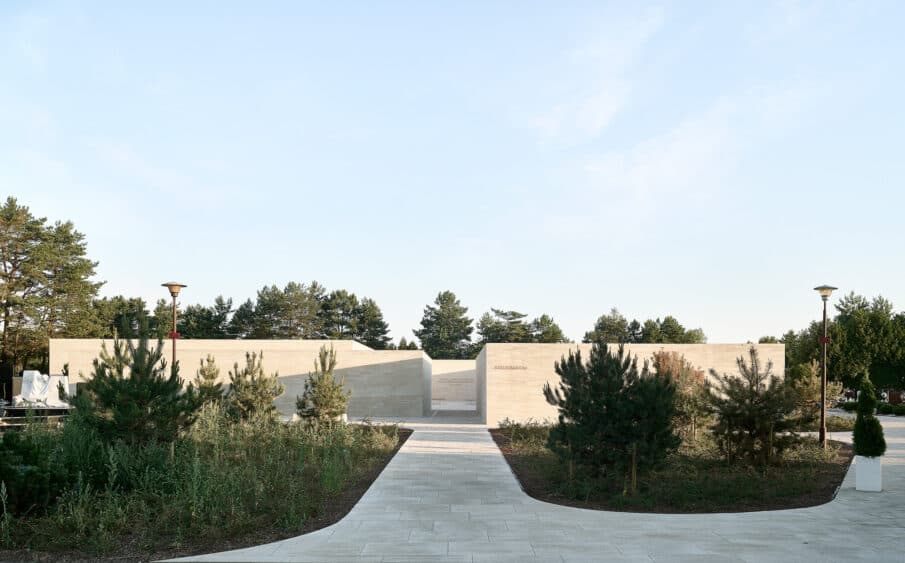
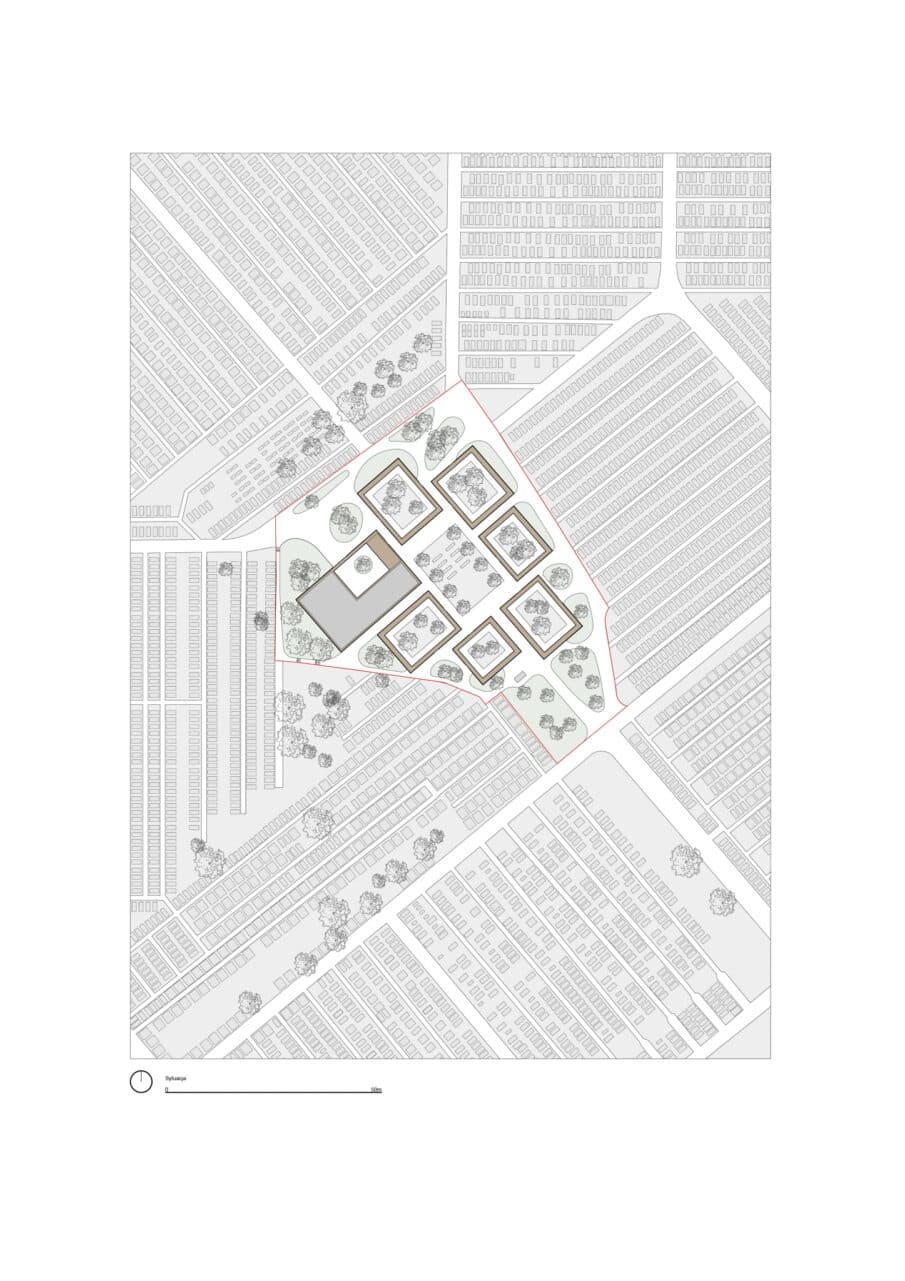
라도미우 납골당(Kolumbarium w Radomiu) 프로젝트는 2017년에 마무리된 건축 공모전을 통해 제안됐다. 과제는 라돔 시립 공동묘지 중심부에 납골함 2,000기를 수용할 수 있는 콜룸바리움Columbarium*을 설계하는 일이었다. 이 묘지는 1957년에 조성되었으며 약 30헥타르가 넘는 규모로 폴란드에서도 손꼽히는 대형 묘지 중 하나다. 다른 교외 공동묘지와 마찬가지로 주변 숲을 잠식하며 빠르게 확장되고 있었다.
The design was created as part of an architectural competition finished in 2017. The task was to design a columbarium of 2,000 niches in the center of the municipal cemetery in Radom. The necropolis was established in 1957, and with an area of more than 30ha it constitutes one of the largest in the country. Like other suburban cemeteries, it is rapidly expanding at the expense of the surrounding forested areas.
*콜롬바리움Columbarium :화장한 유골을 안치하는 납골당을 뜻함. 어원은 비둘기를 의미하는 라틴어 ‘columba’에서 유래했다. 고대 로마 시대, 벽면의 작은 틈새(니치)에 유골함을 안치하던 모습이 마치 비둘기 집과 비슷하다고 하여 붙여진 이름이다.
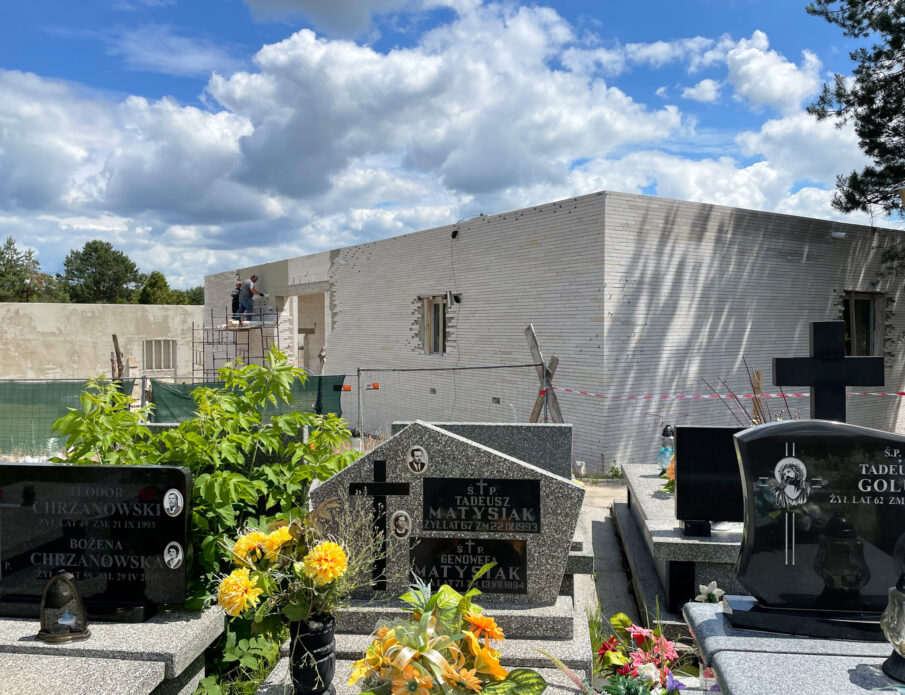
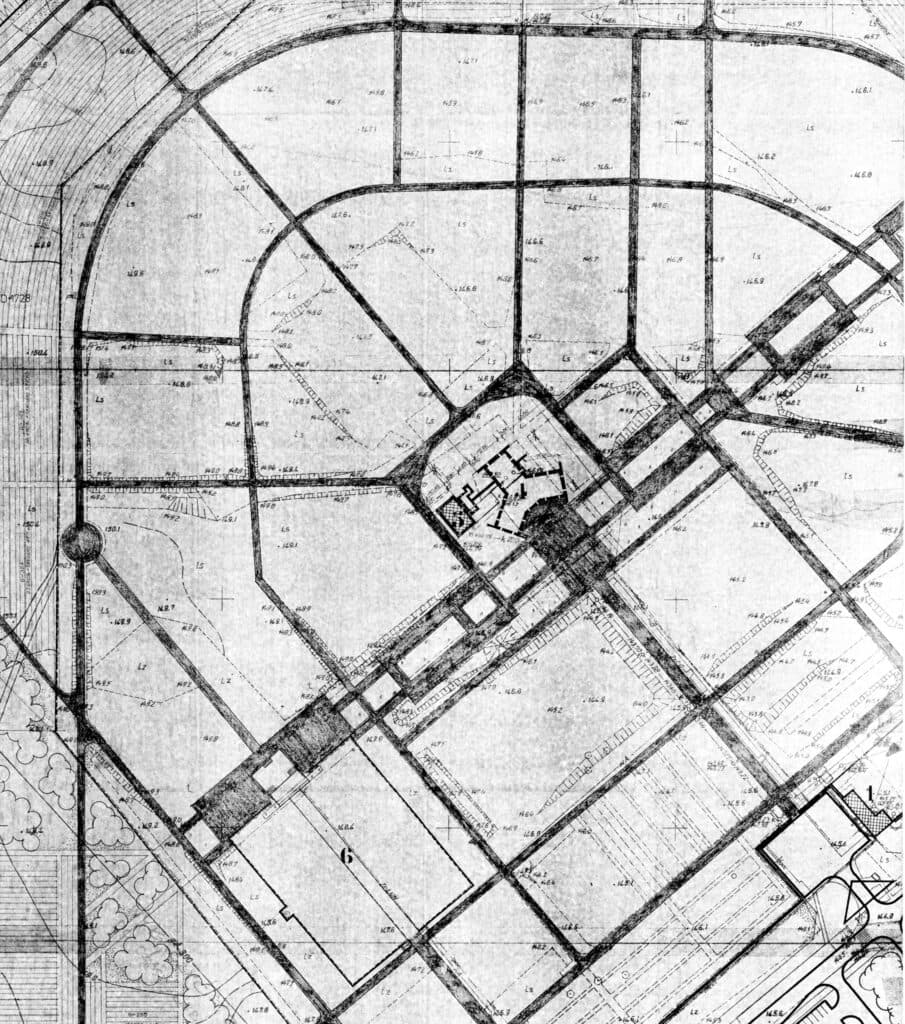
공모의 첫 번째 목표는 집약적인 안치 방식을 도입한 대형 콜롬바리움을 통해 묘역의 무분별한 확장을 억제하는 것이다. 두 번째 목표는 묘지 중심부의 미완된 장소를 정비하는 일이다. 이곳은 1980년대에 종교 통합 예배당과 장례 준비 공간이 계획되었다. 하지만 실제로는 예배당 기초와 일부 시설만 건설된 채 방치되어 왔다. 이번 공모는 기존의 장례 준비 건물을 콜롬바리움 설계 안에 유기적으로 통합할 것을 요구한다.
The first premise of the competition was to stop this process by building a large columbarium that is involved with a more compact form of burial. The second premise of the competition was to clean up the central part of the necropolis, where an ecumenical chapel with a pre-burial house was to be built in the 1980s. In the end, only the chapel foundations and the pre-burial house were build, the latter was to be incorporated into the design of the columbarium as part of the competition.
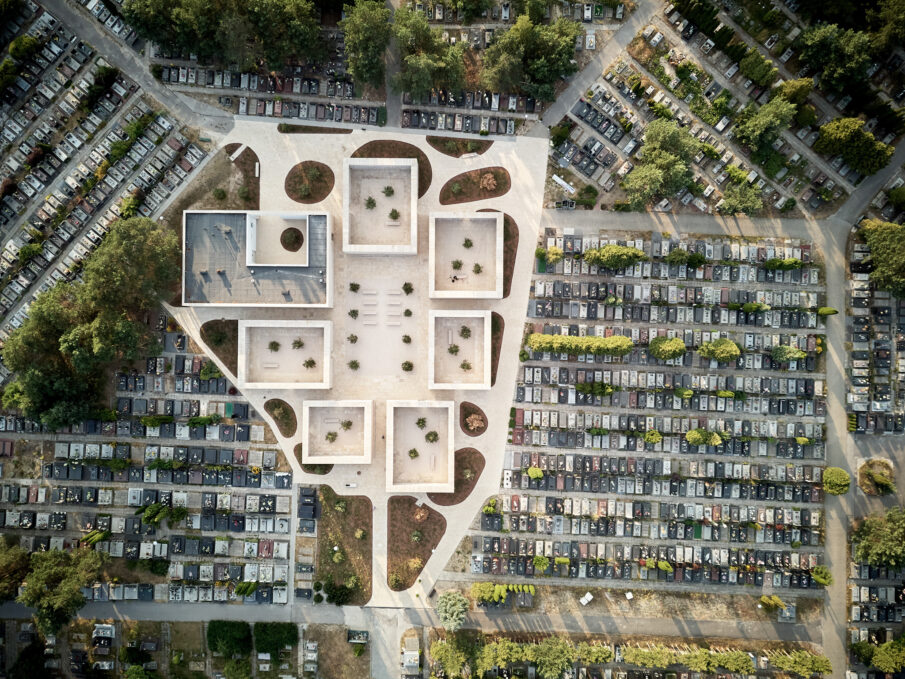
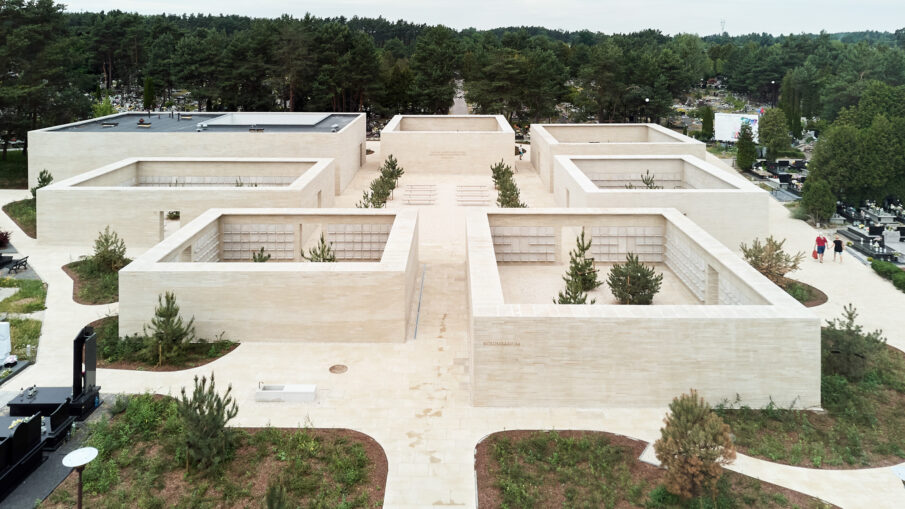
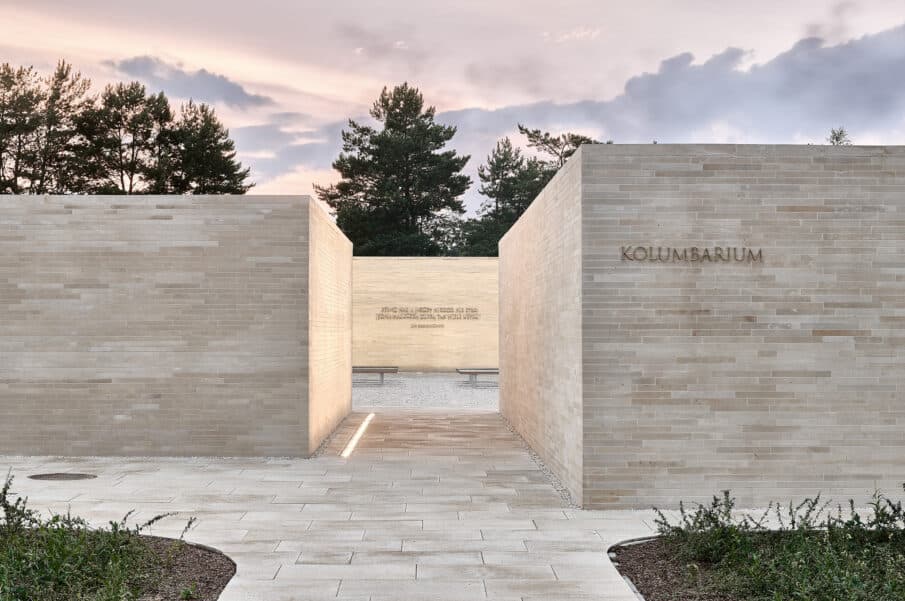
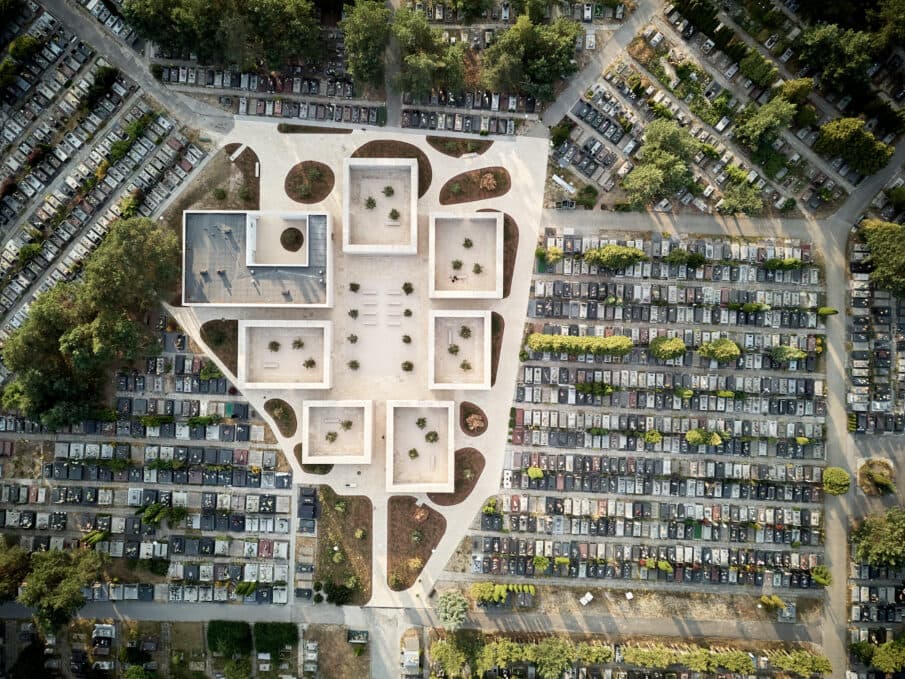
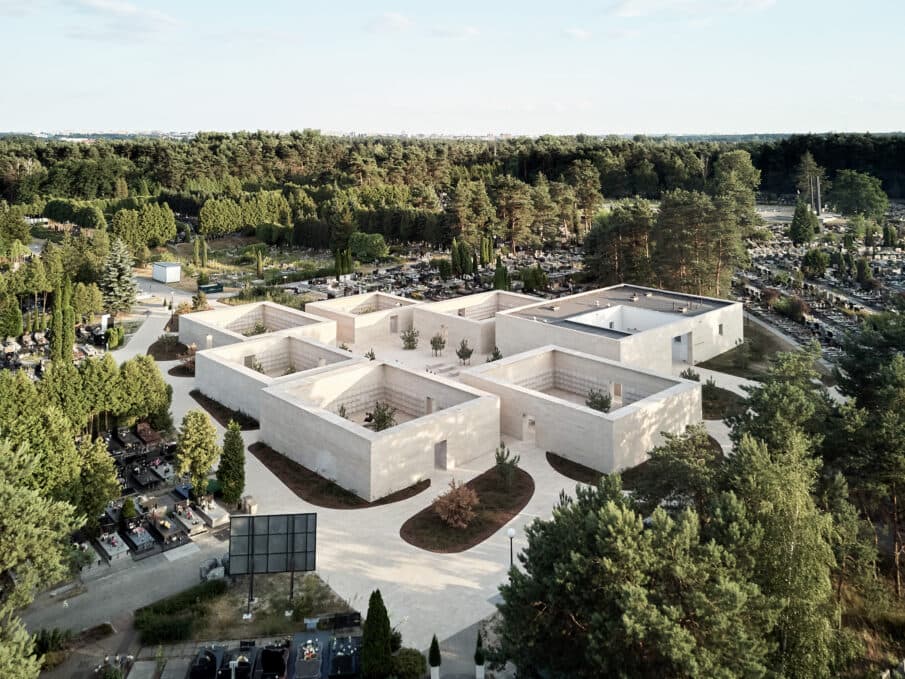
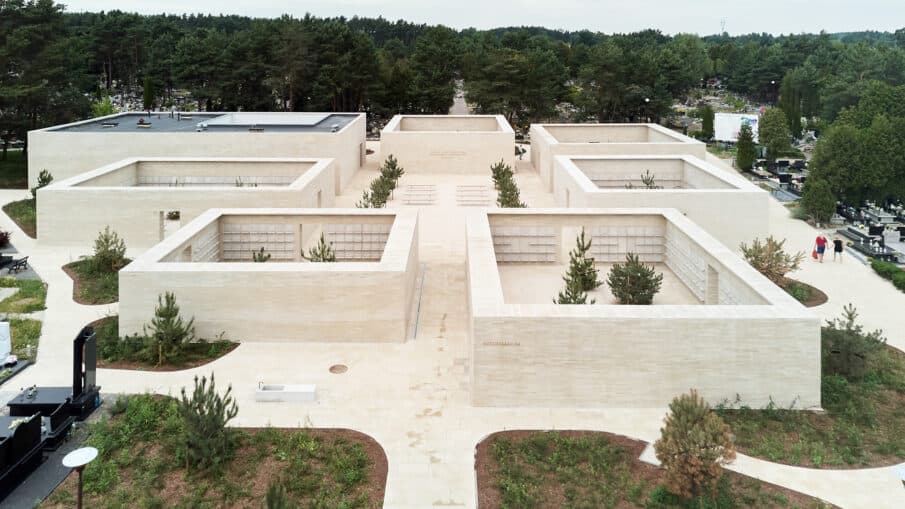
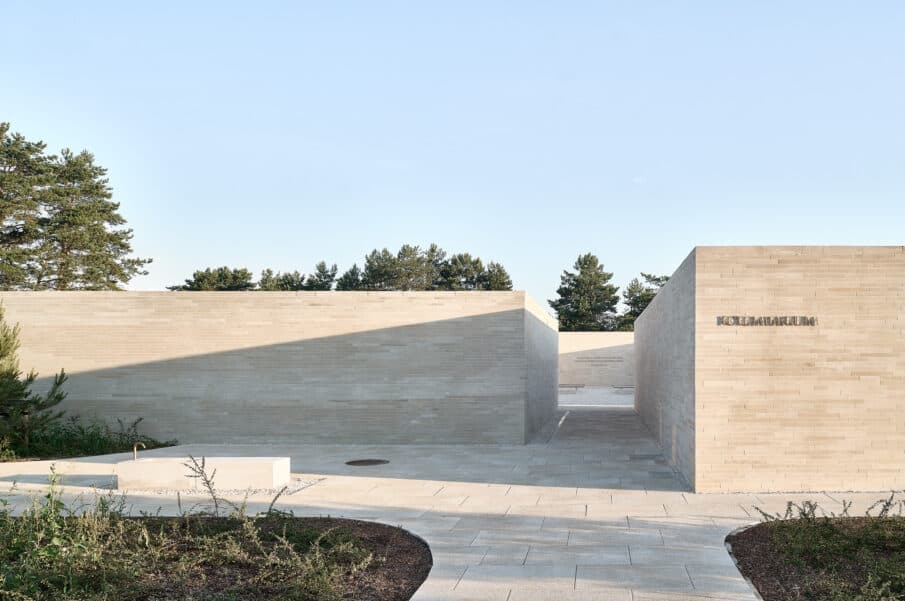
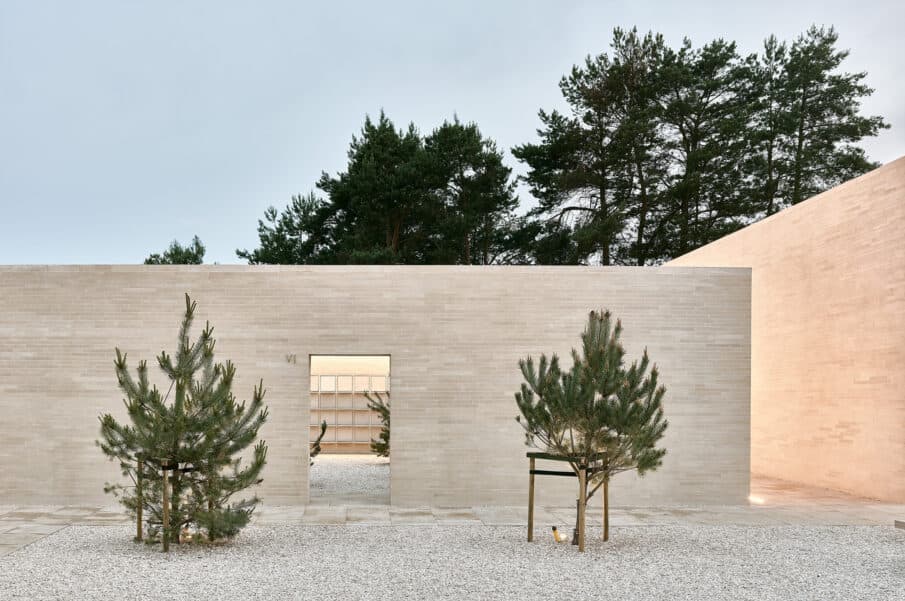
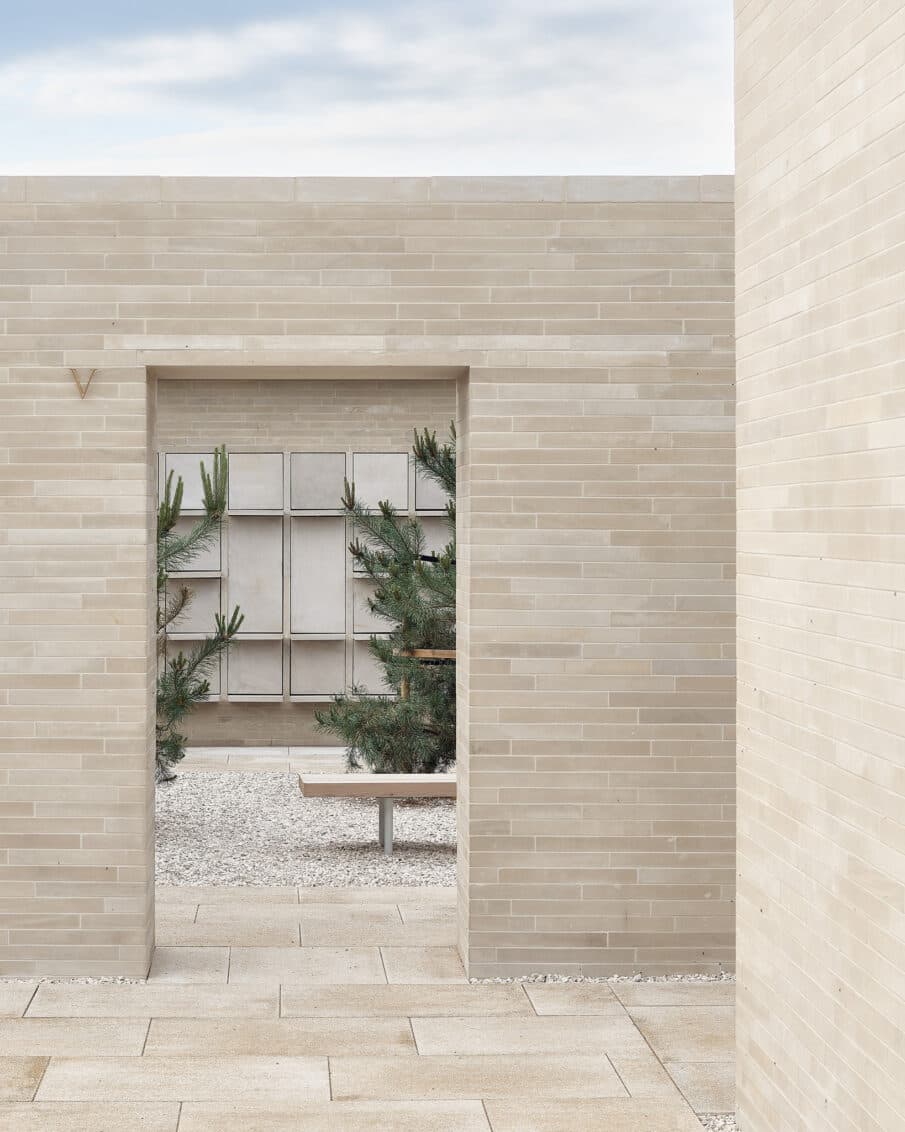
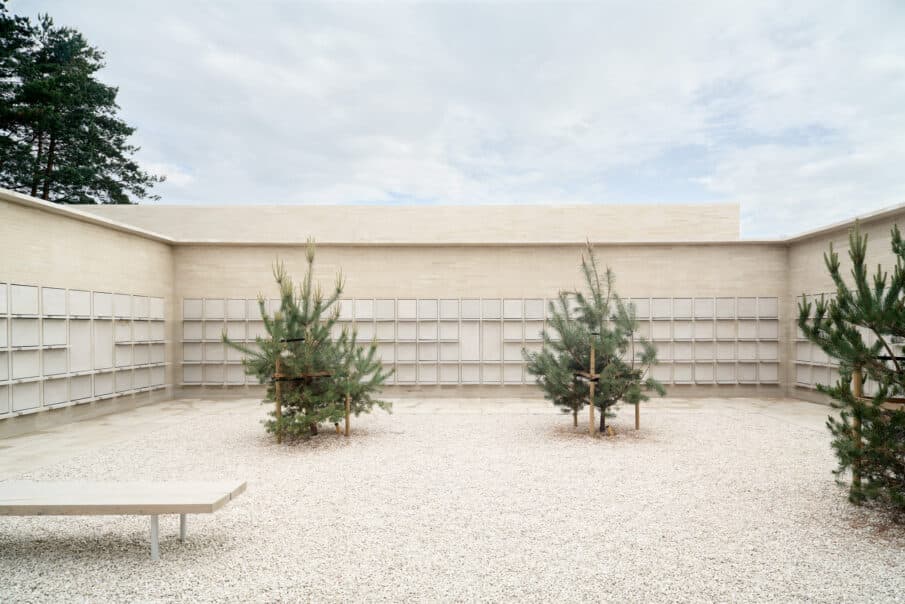
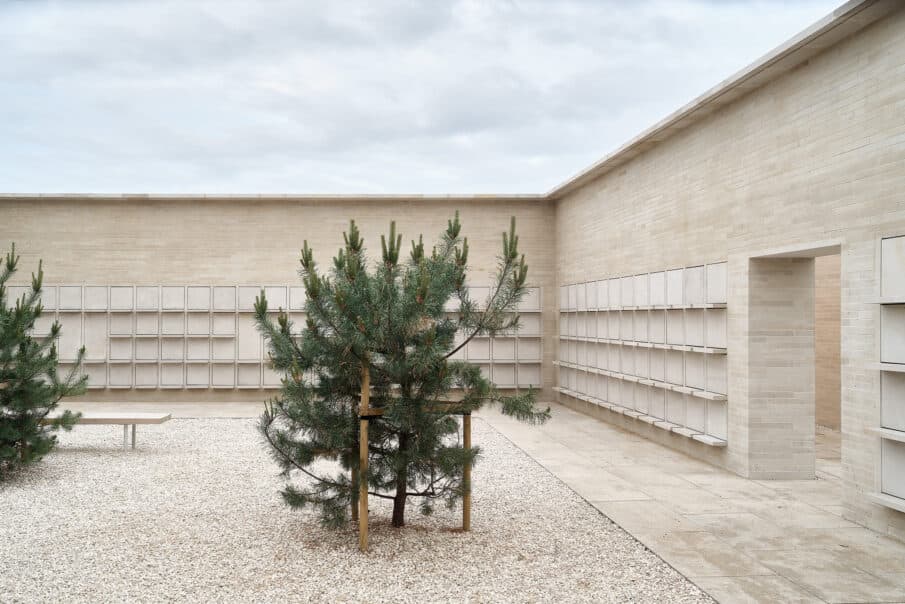
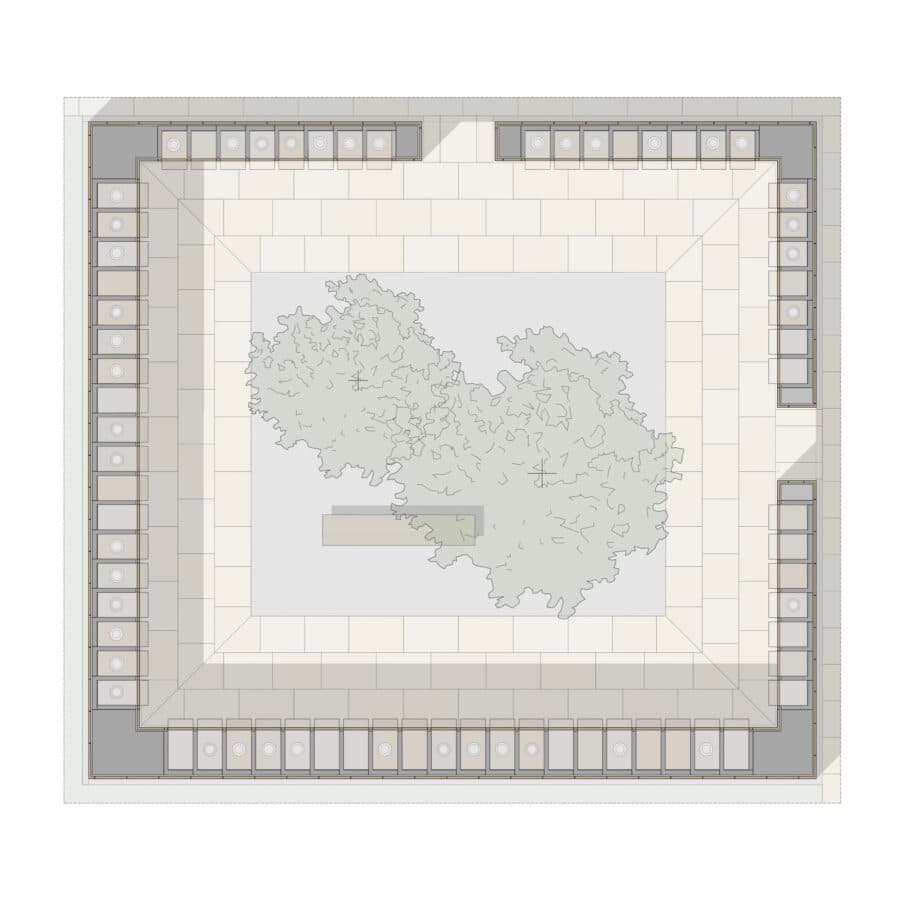
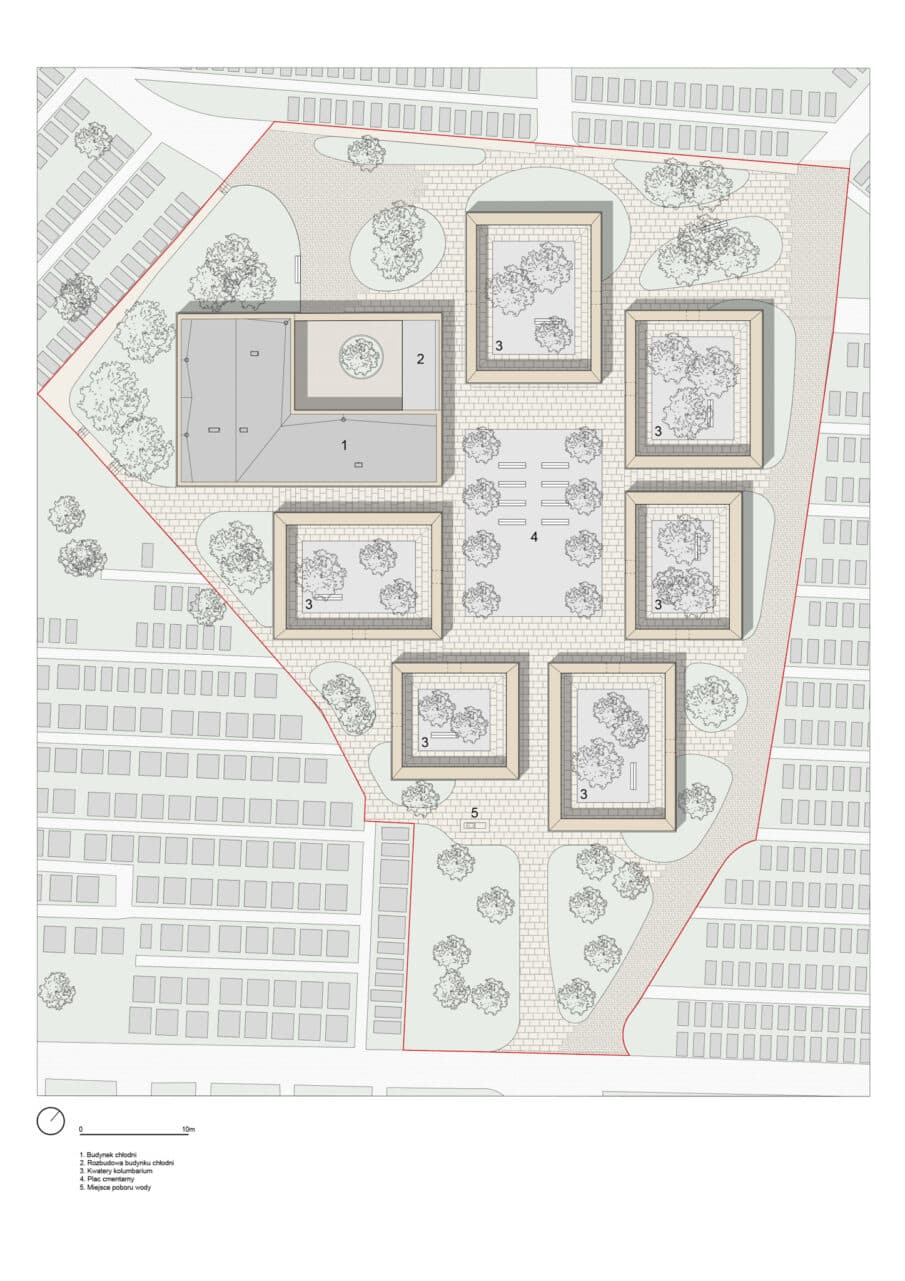
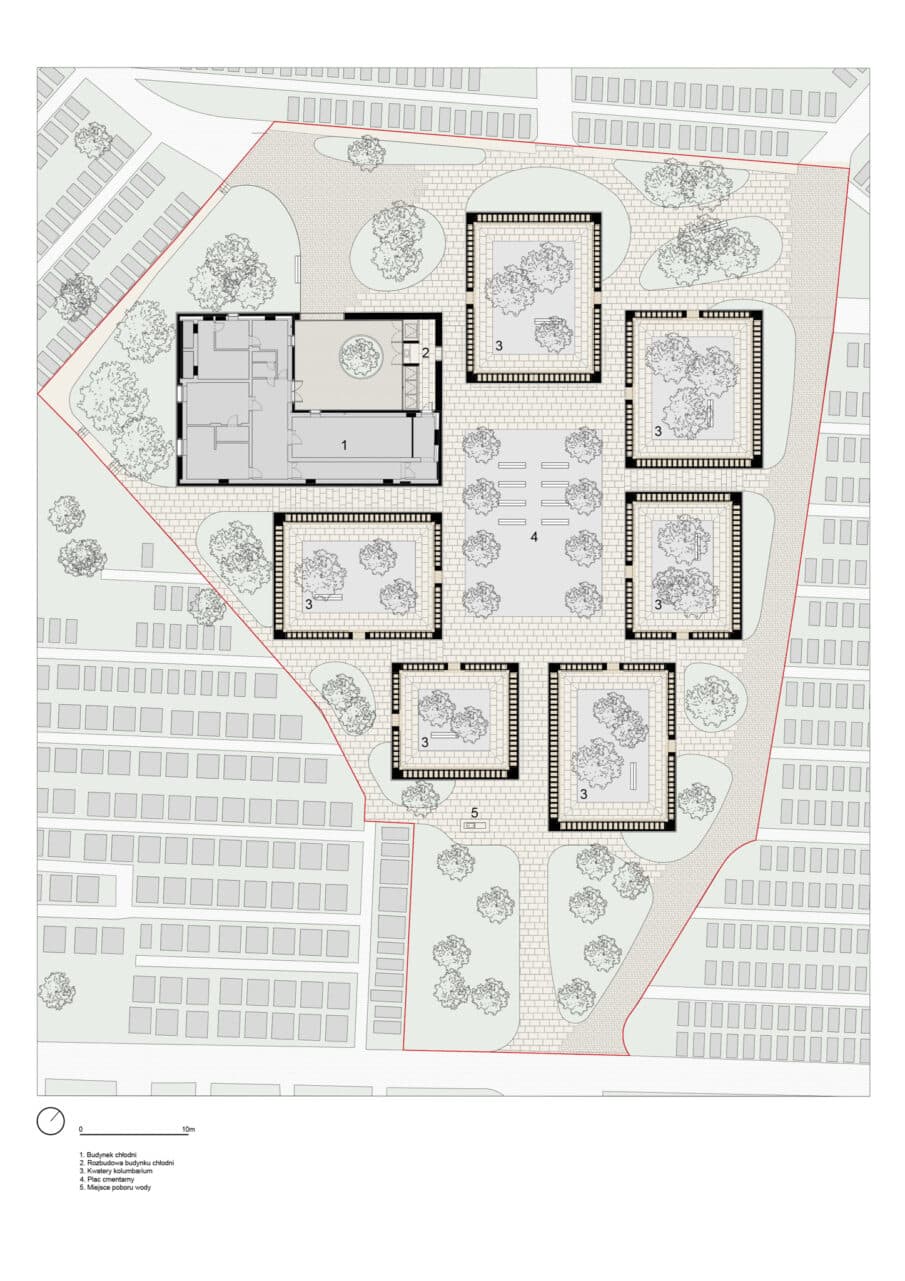
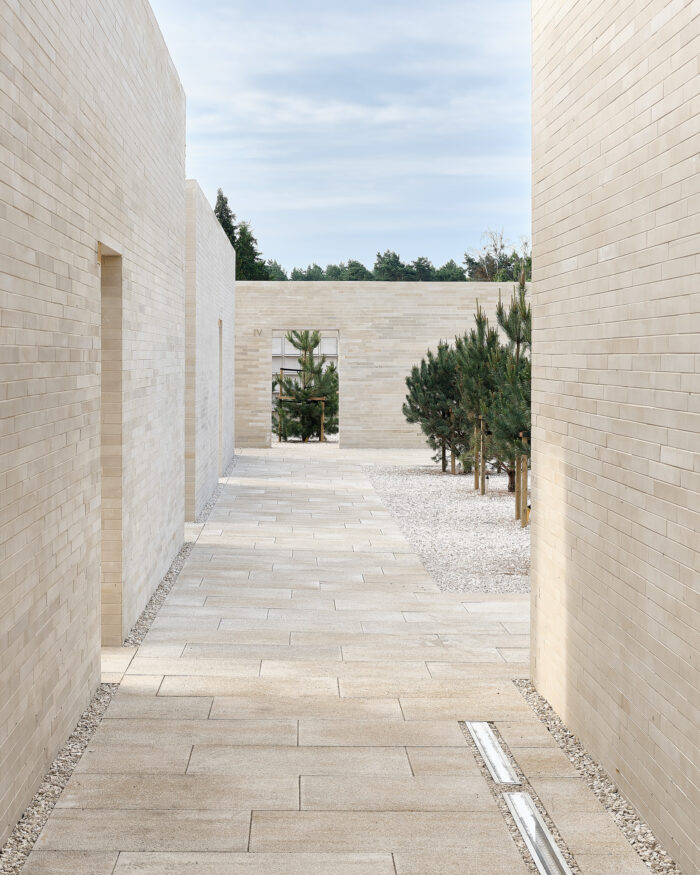
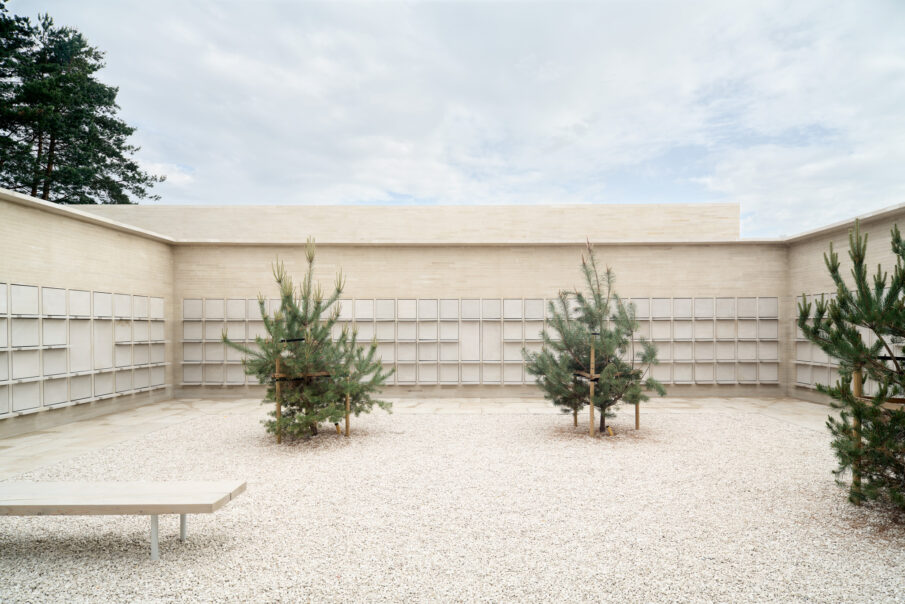
총 2,000기의 납골함은 여러 개의 작은 공간으로 분절하여 배치했다. 방문객이 정적 속에서 고인을 추모하며 사랑하는 이의 안식처를 마주할 수 있도록 하기 위함이다. 각 공간은 서로 다른 높이의 블록으로 설계되어 중앙의 핵심 공간인 공동 추모 광장을 둘러싼다. 그중 가장 높은 블록은 기존의 장례 준비 건물을 활용해 구축했다. 블록은 벽으로 둘러싸인 안뜰을 포함한다.
The burial plan (2,000 niches) has been divided into smaller chambers that create intimate spaces, supporting focus and finding your loved one’s resting place. The chambers were designed as blocks of varying heights arranged around a central focal point – the ecumenical square. The tallest on them is formed by the existing pre-burial house, with a wall enclosed courtyard.
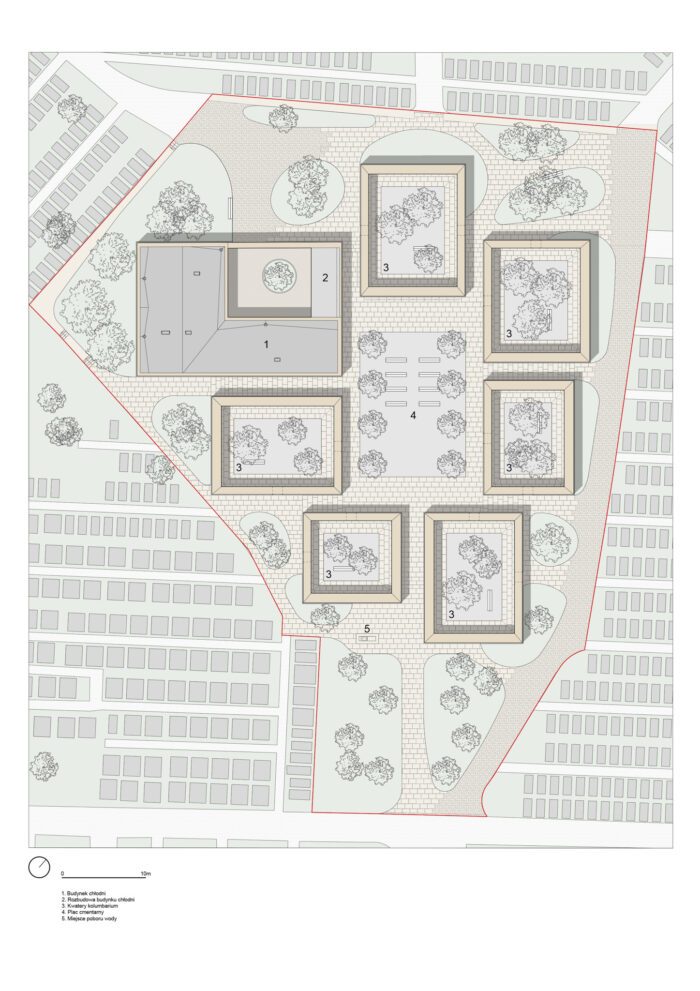
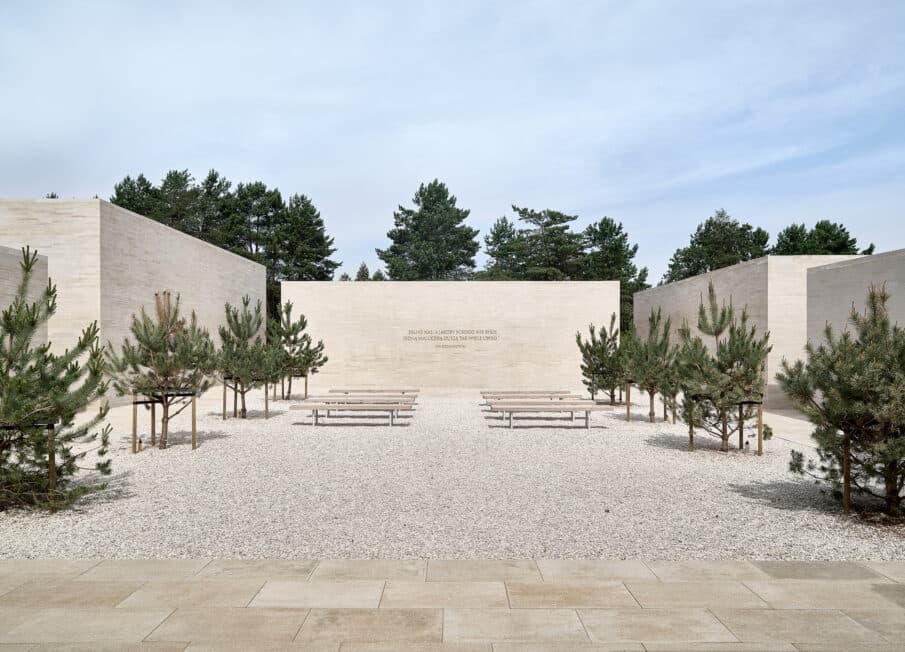
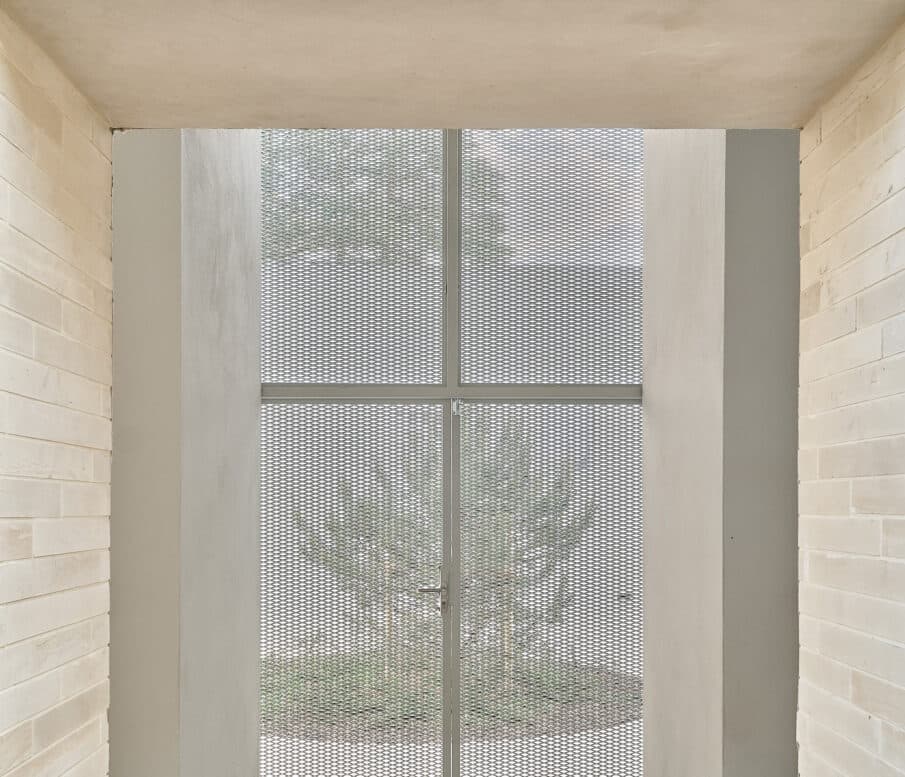
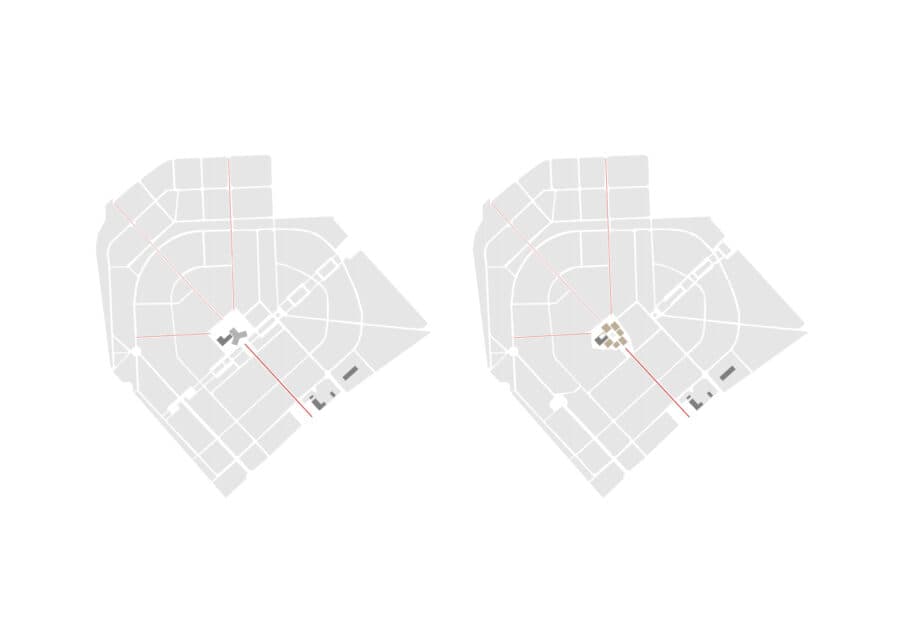
중앙 광장은 원래 예배당을 계획했던 자리로 묘지의 중심축 위에 놓여 있다. 콜룸바리움 블록들로 둘러싸인 이 공간은 향후 장례 의식을 위한 장소이자 묘지 전체를 위한 공동의 추모 공간으로 활용할 수 있다. 녹지는 이 공간에서 중요한 역할을 한다. 가장자리를 정돈한 화단에는 지면을 덮는 관목을 심었다. 인근 숲에서 자라는 수종인 스코틀랜드 소나무 50그루를 심었다.
The central square is located on the site of the unrealized chapel – on the main axis of the cemetery. This intimate space, closed off by columbarium blocks, may become a place for future funeral rites and an ecumenical gathering space for the entire cemetery. Greenery plays an important role here, designed in the form of edged fields planted with creeping shrubs. Fifty Scots pines, a tree that grows in the neighboring woods, have also been planted.
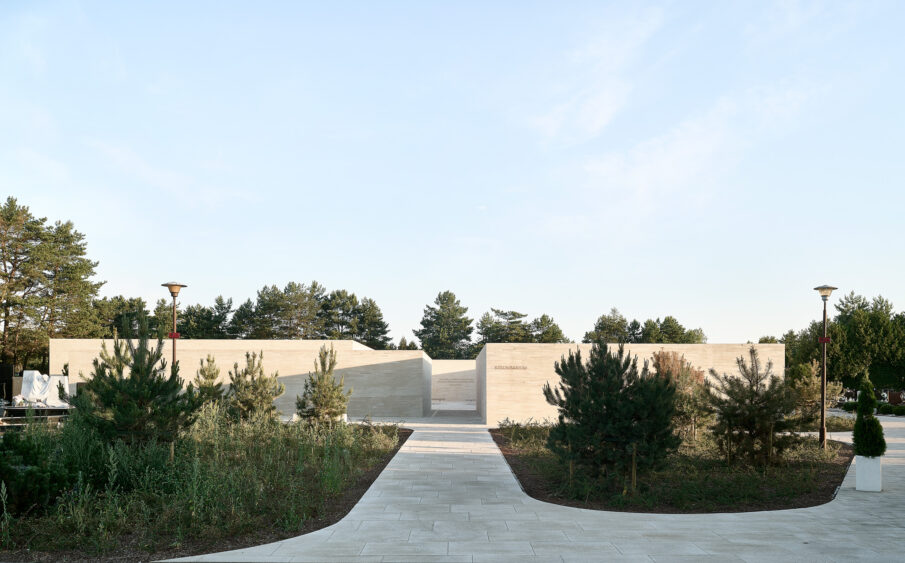
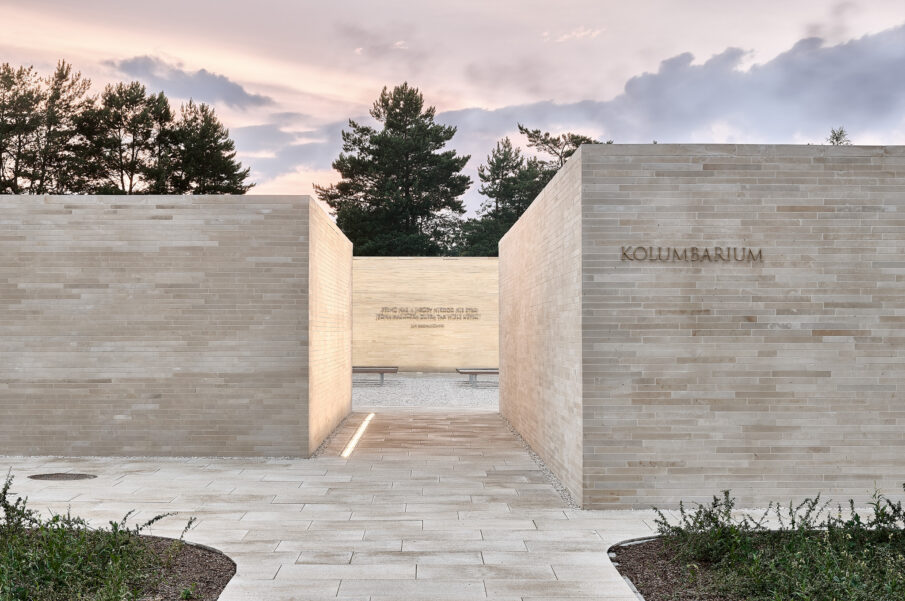
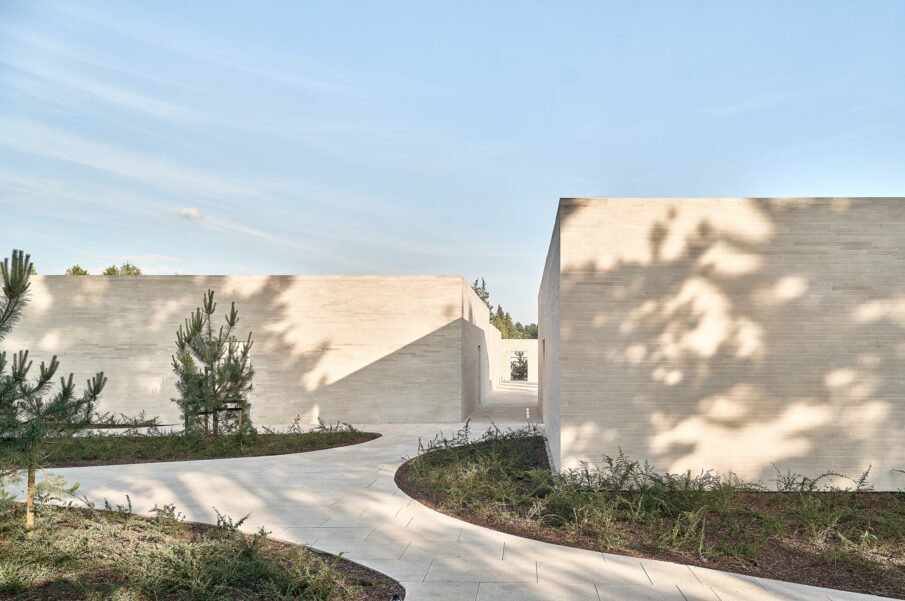
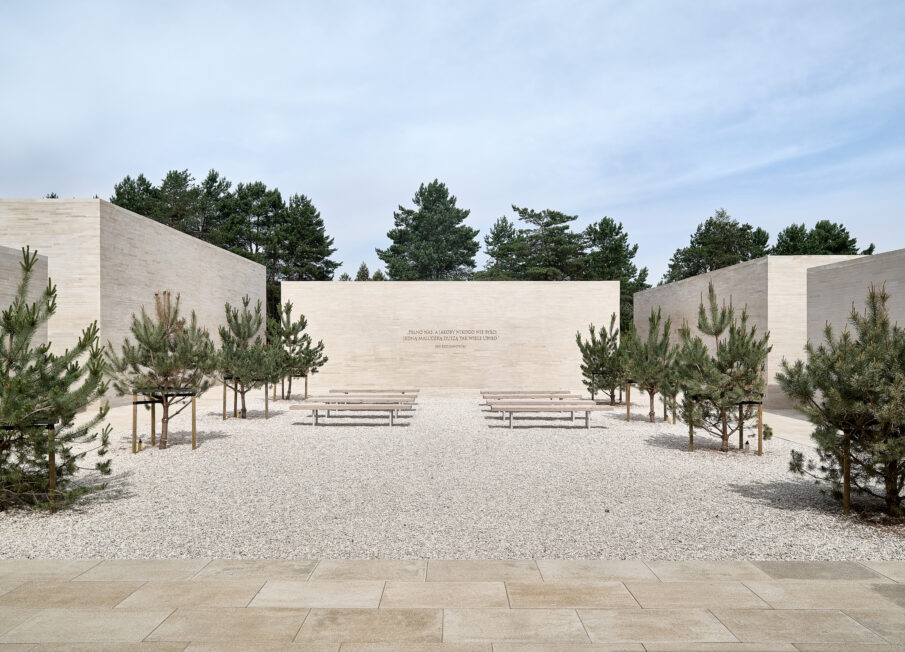
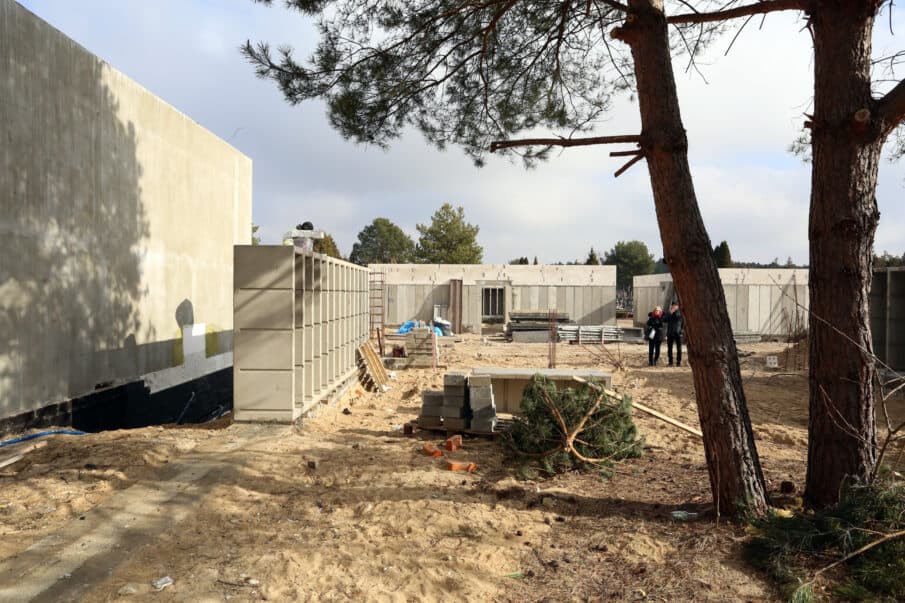
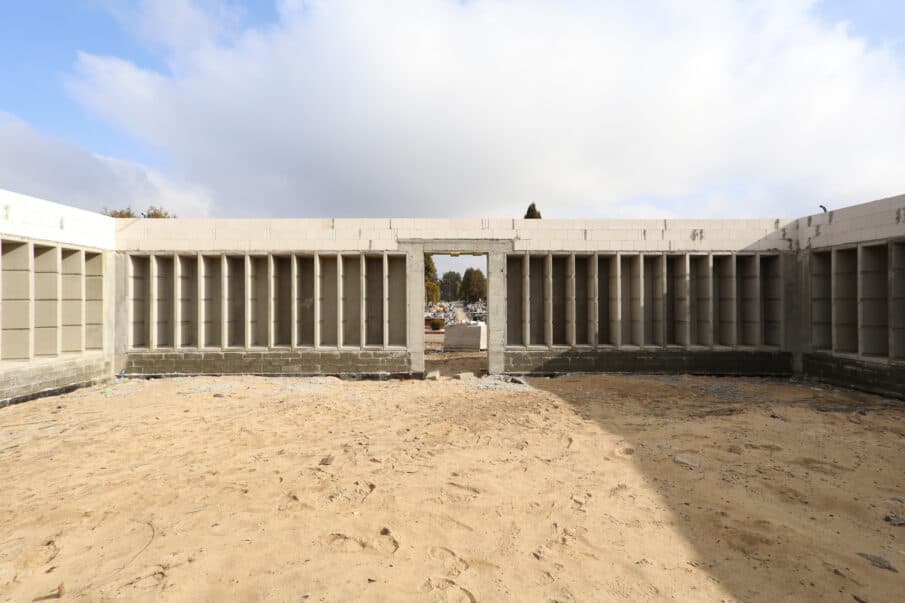
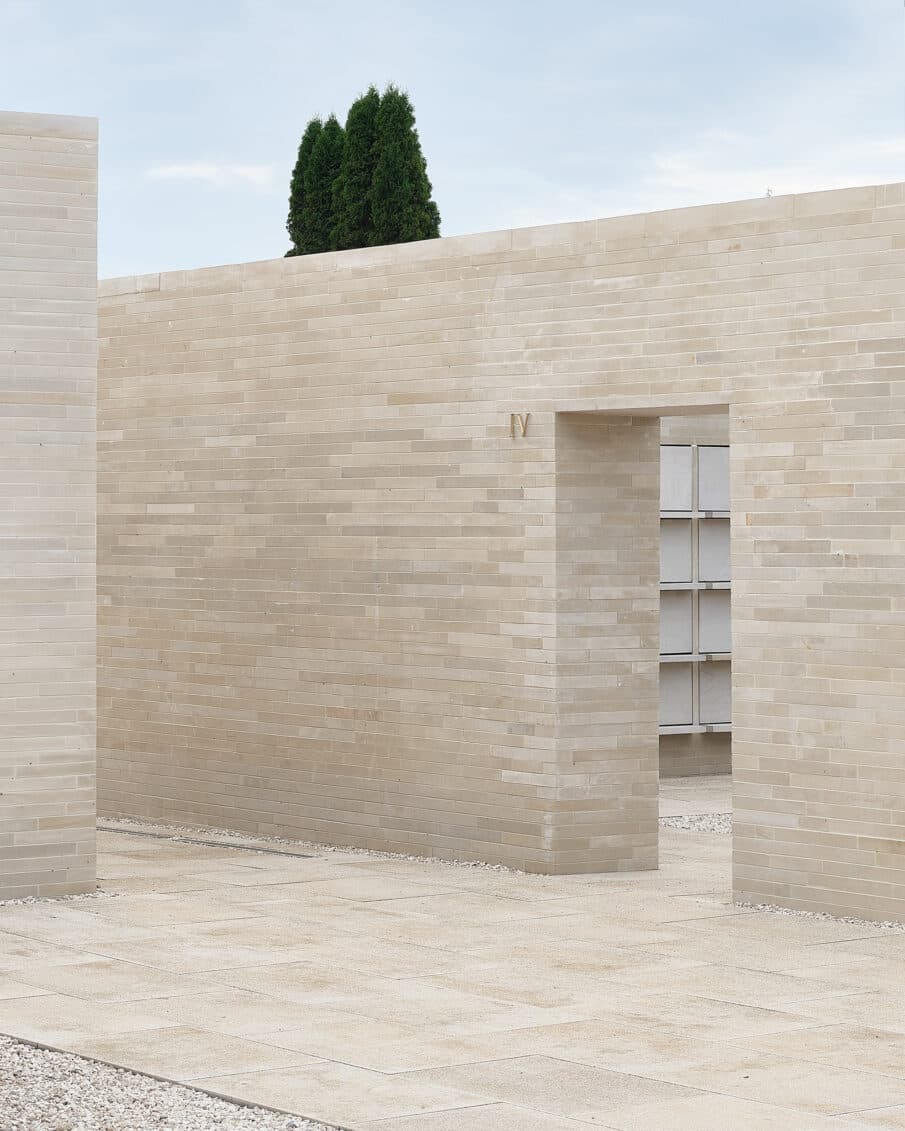
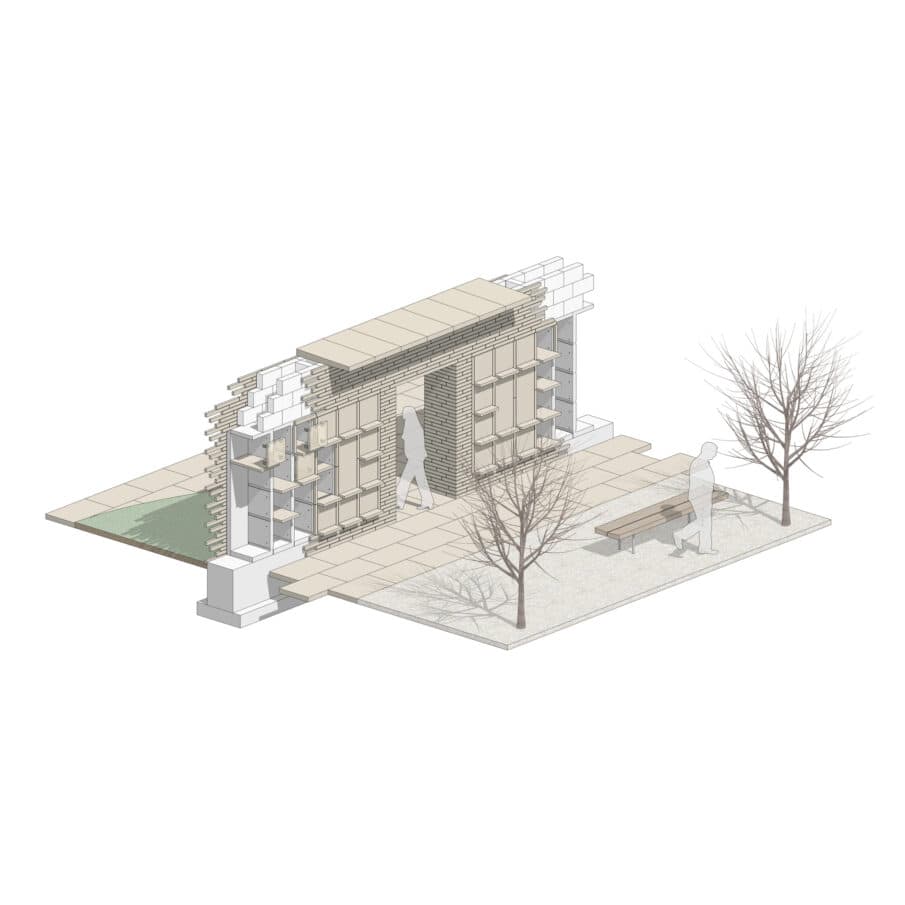
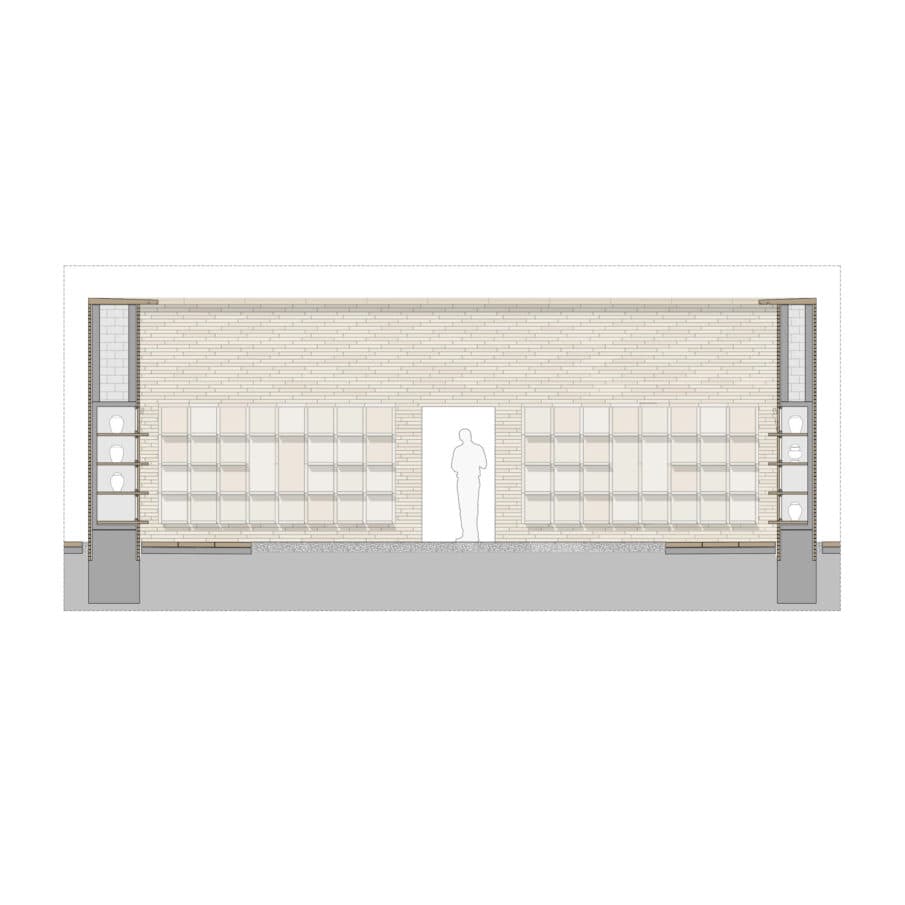
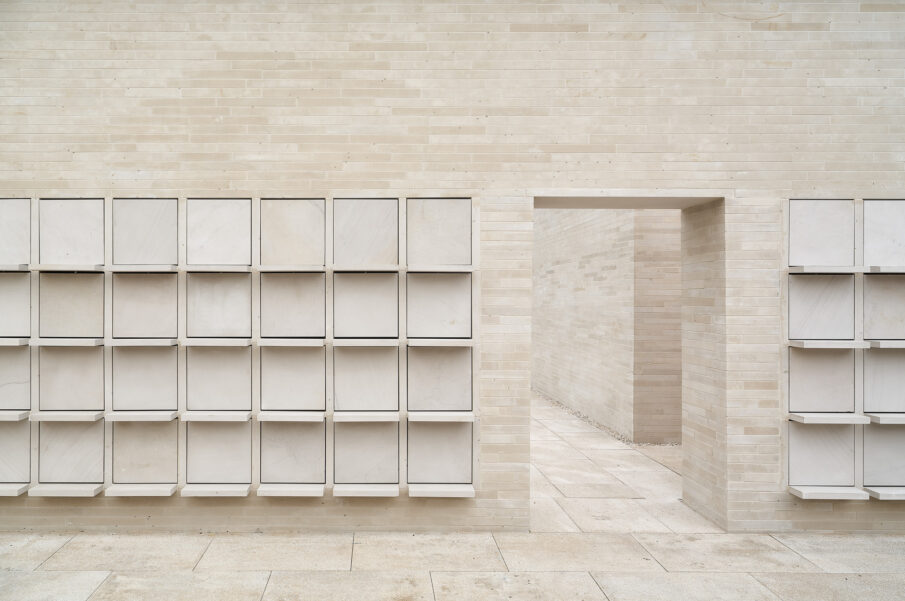
콜룸바리움의 납골함 안치 공간과 기본 구조는 프리캐스트 콘크리트Precast Concrete** 요소로 제작되었으며 철근콘크리트 기초 위에 설치했다. 상부에는 높이가 다른 벽체를 세워 각 공간이 비례와 높이에서 서로 다른 공간감을 갖도록 했다.
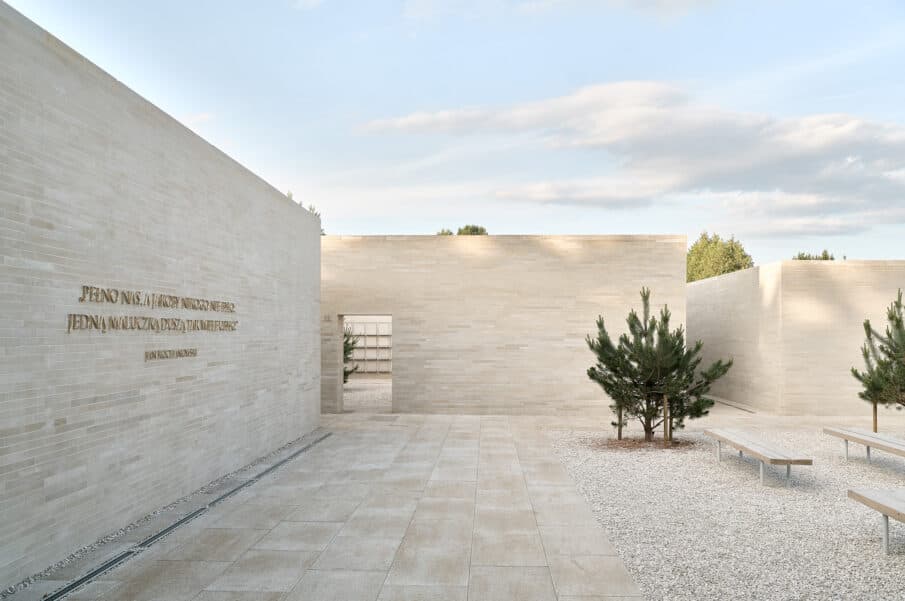
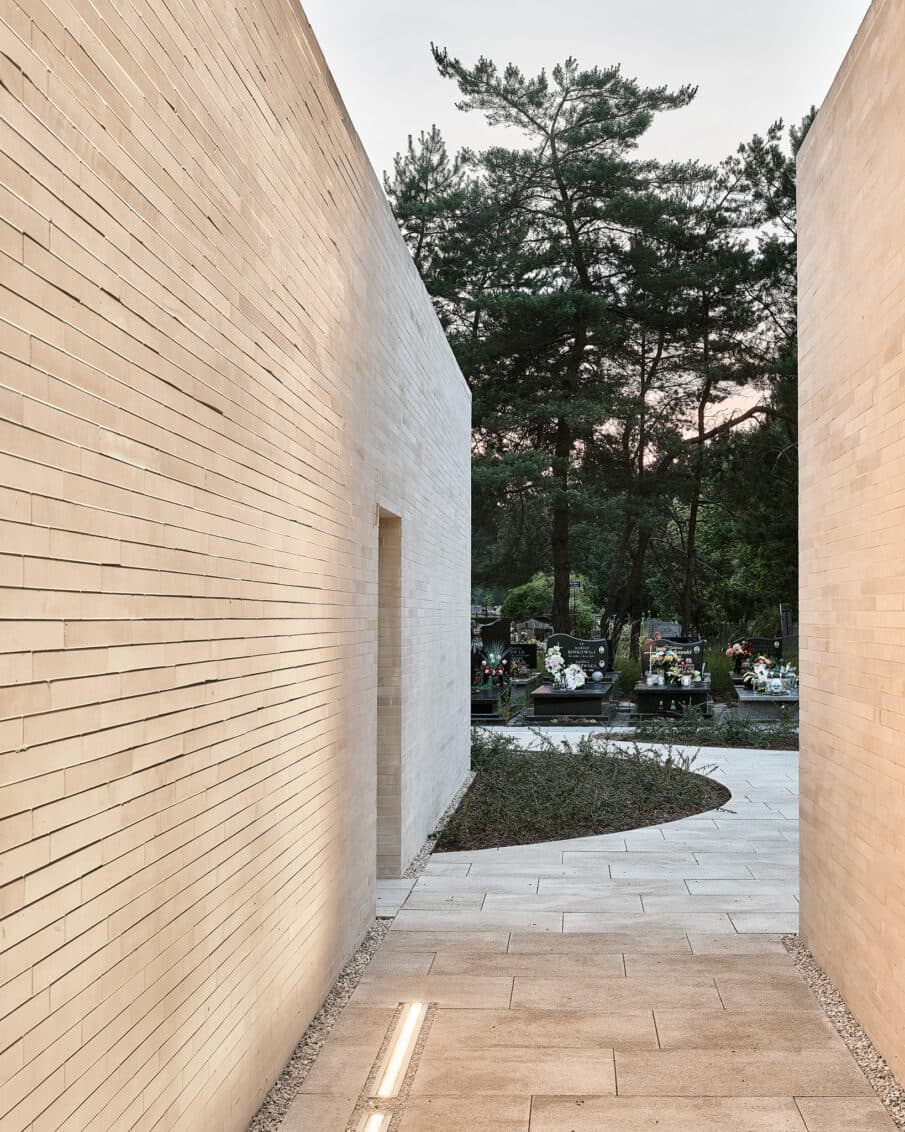
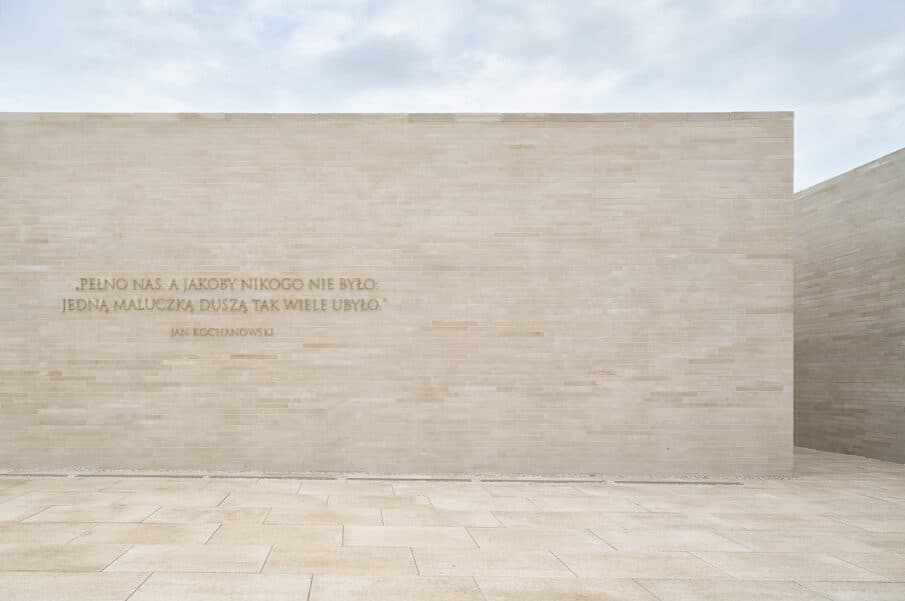
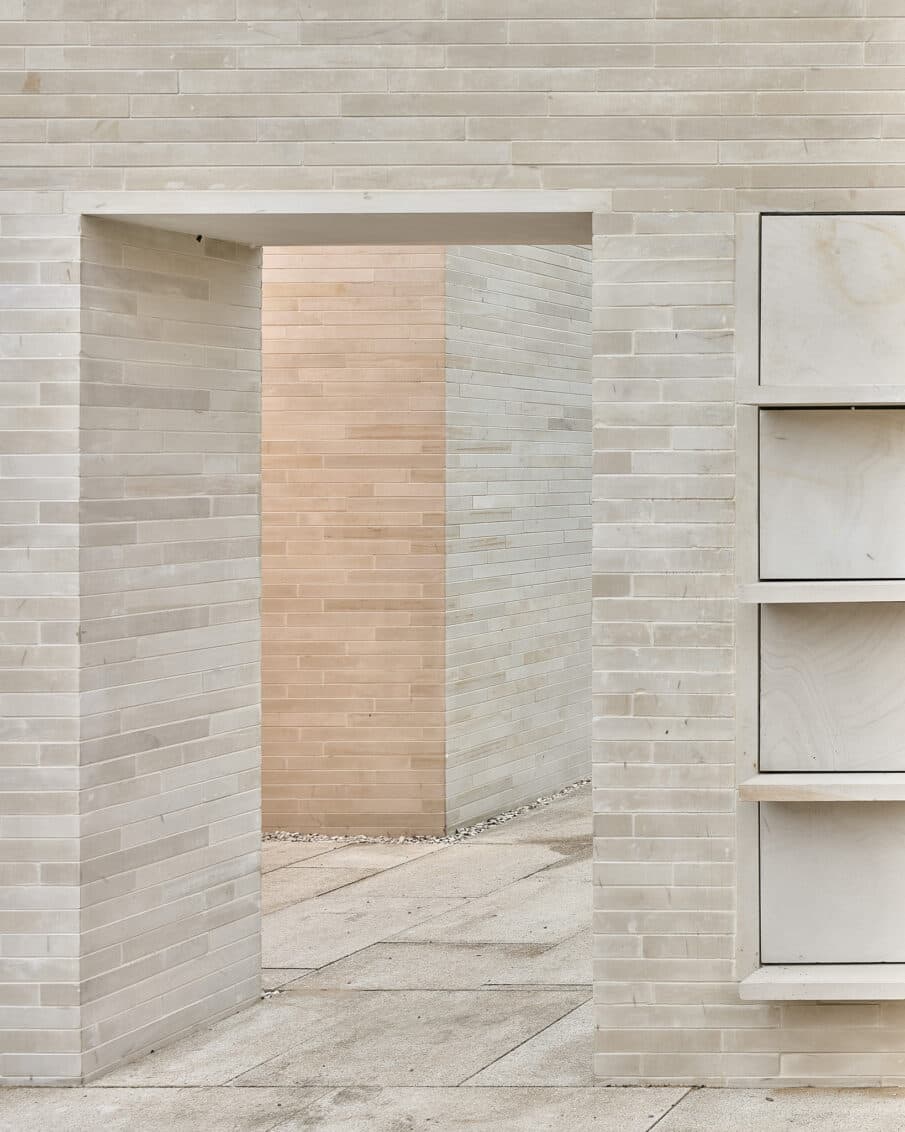
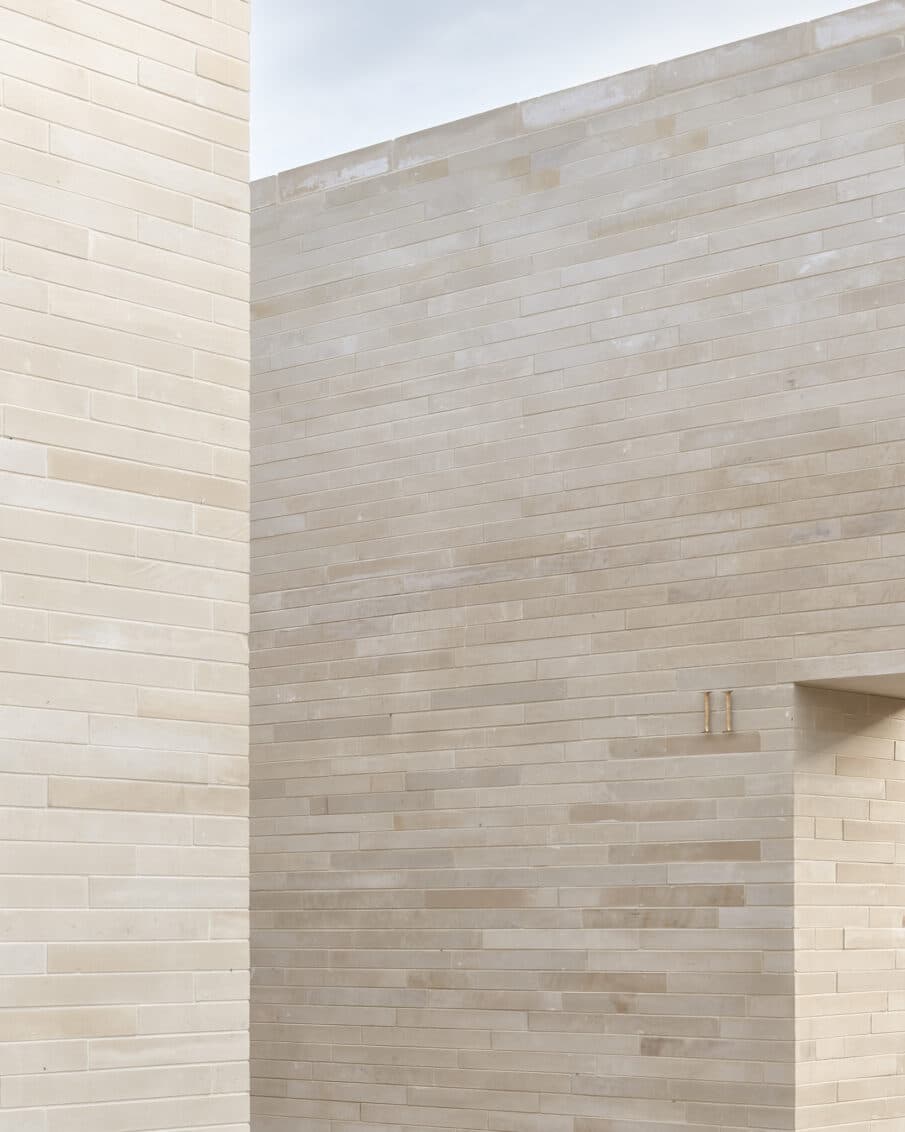
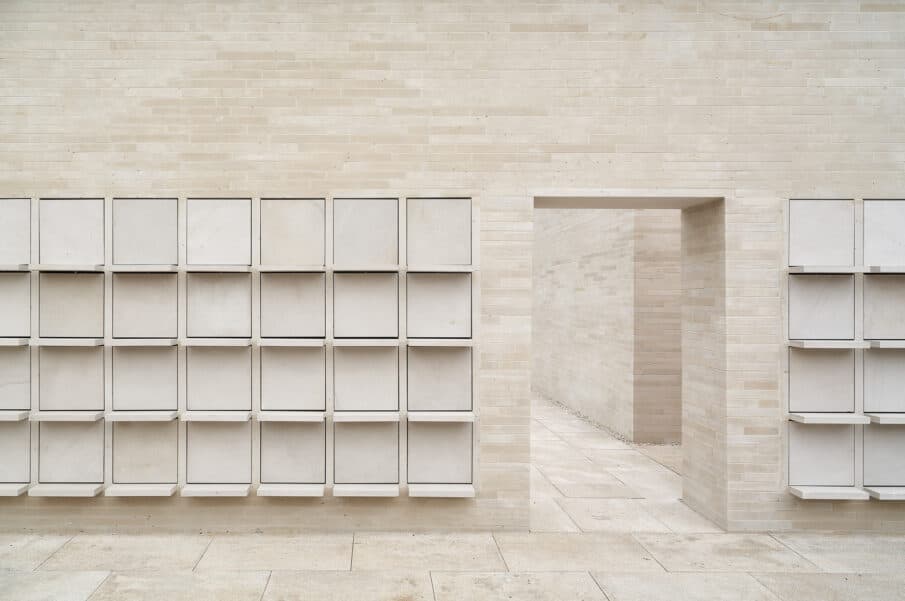
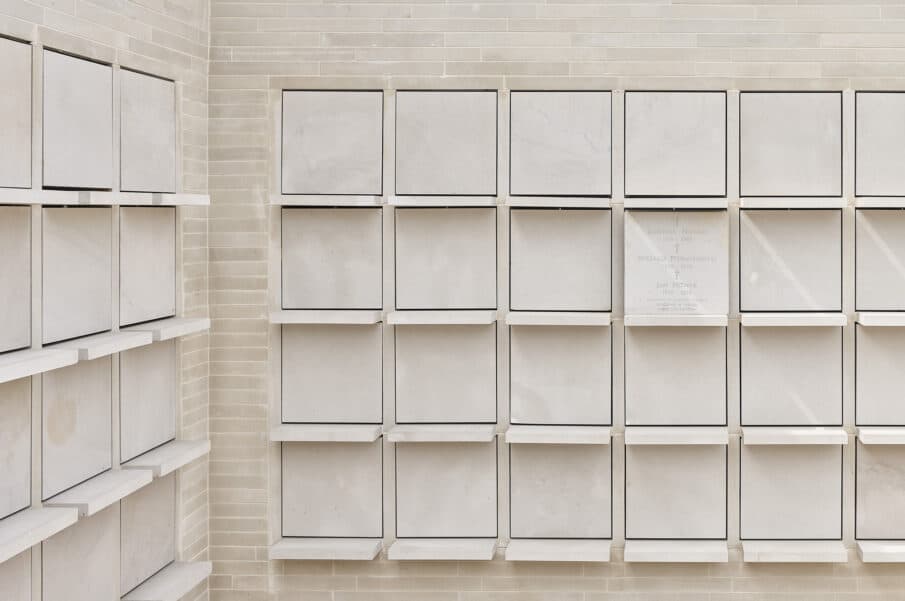
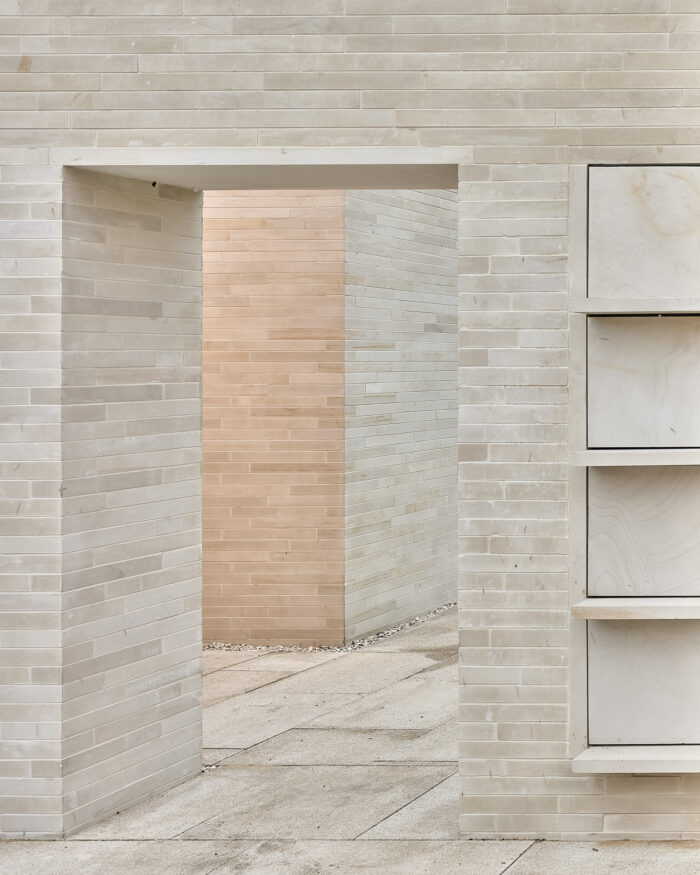
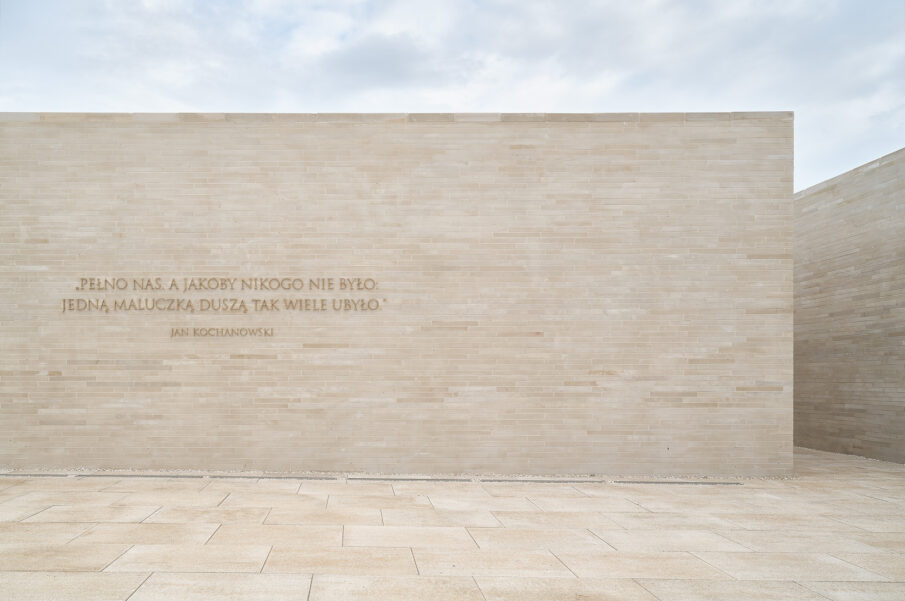
각 공간과 장례 준비 공간의 외벽을 지역 채석장의 사암 블록으로 마감했다. 사암은 납골함 안치 공간을 여닫는 선반과 명판에도 사용했다. 바닥 슬래브는 라돔 지역의 콘크리트 공장에서 개별 마감 방식으로 제작했다.
Both the niches for the columbarium urns and its basic structure were made of precast concrete elements, supported by reinforced concrete footing strip. Attics of varying heights were built on top, so that the columbaria chambers differ not only in the proportion of the courtyards but also in height.
From the outside, the chambers and the pre-burial house with a rebuilt facade were clad with oblong sandstone blocks from local quarries. Sandstone was also used to make shelves and plaques with concealed fixtures that allow niches to be opened and closed. The floor slabs were designed and constructed with an individualized finish at a Radom-based concrete plant.
**프리캐스트 콘크리트(PC):공장에서 철근 콘크리트 부재(기둥, 보, 슬래브 등)를 정밀 제작 후 현장에서 조립하는 건설 방식이다.
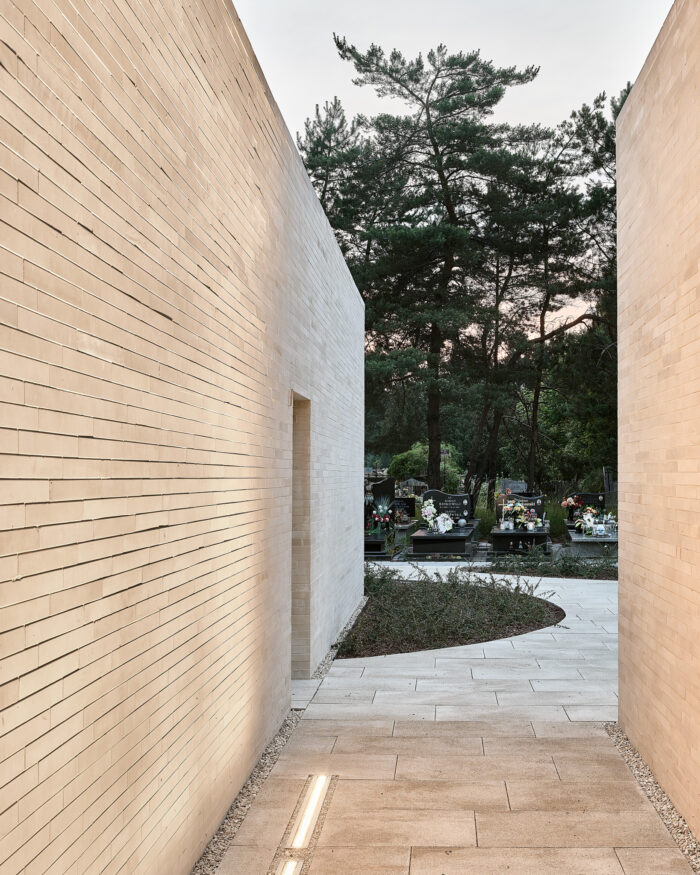
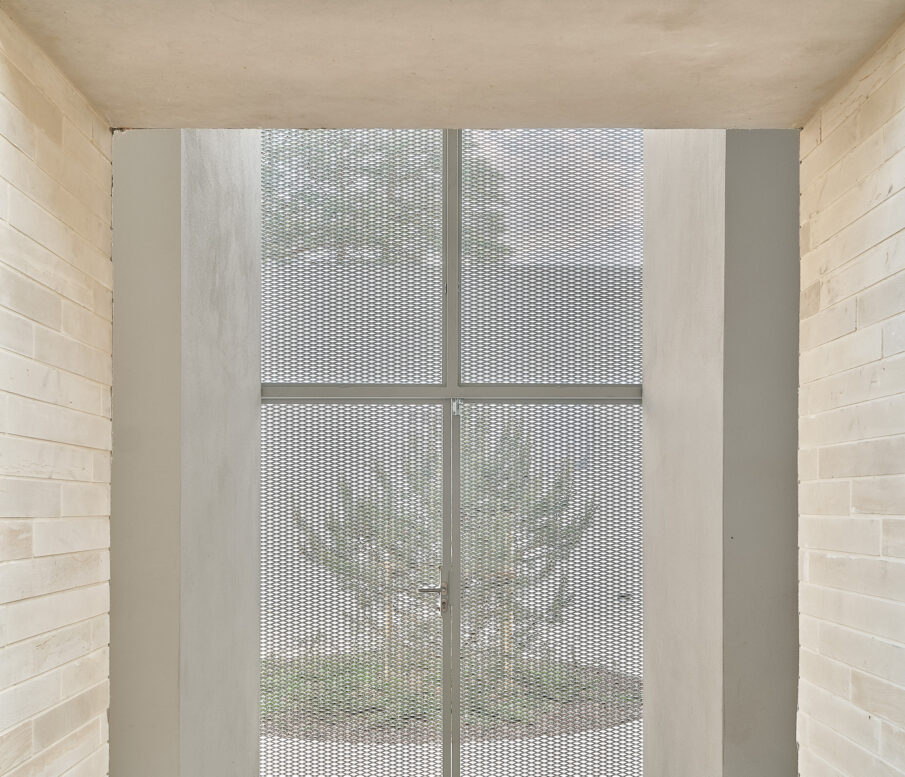
완공된 건물의 거의 모든 요소에는 지역성이 드러난다. 사암, 바닥 슬래브, 그리고 무엇보다 프로젝트 전체에서 중요한 역할을 한 지역 석공과 장인들의 노동과 기술이 그 예다.
이 구조물이 고인을 향한 존중을 담아내고 화장과 납골함 안치에 대한 적절한 기준을 제시하기를 바란다. 고령화가 진행되는 사회에서 이러한 매장 방식은 앞으로 더욱 중요해질 것이다.
Local character is evident in almost every element of the completed building: the sandstone, the floor slabs and, above all, the work and effort of local stonemasons and craftsmen, whose contribution was of great importance to the overall project.
We hope that the resulting structures convey respect for the departed and the proposed solutions introduce proper standards related to cremation and placing urns in columbaria. In the face of aging population, this method of burial will surely become increasingly desirable.
광주요 이천 공장 리노베이션: 낡은 공장에서 지속가능한 명품 찾기
지음플러스 Geeumplus
울주군 상가주택 리노베이션: 노후 상가주택의 화려한 변신
오픈스튜디오 건축사사무소 Open Studio Architecture
[Germany] 미셸베르거 농장: 농가를 재해석한 호텔
시구르드 라르센 디자인 & 아키텍처 Sigurd Larsen Design & Architecture
보이어 스튜디오: 절제된 외관, 색으로 채운 내부
구보건축 GUBO Architects
코지모리: 보호수와 함께한 파출소 리노베이션
아틀리에소우 Atelier SOW
[Finland] 키르코눔미 도서관: 구리 슁글에 새긴 도시의 해양 유산
제이케이엠엠 아키텍츠 JKMM Architects